Pierogi Z Jagodami

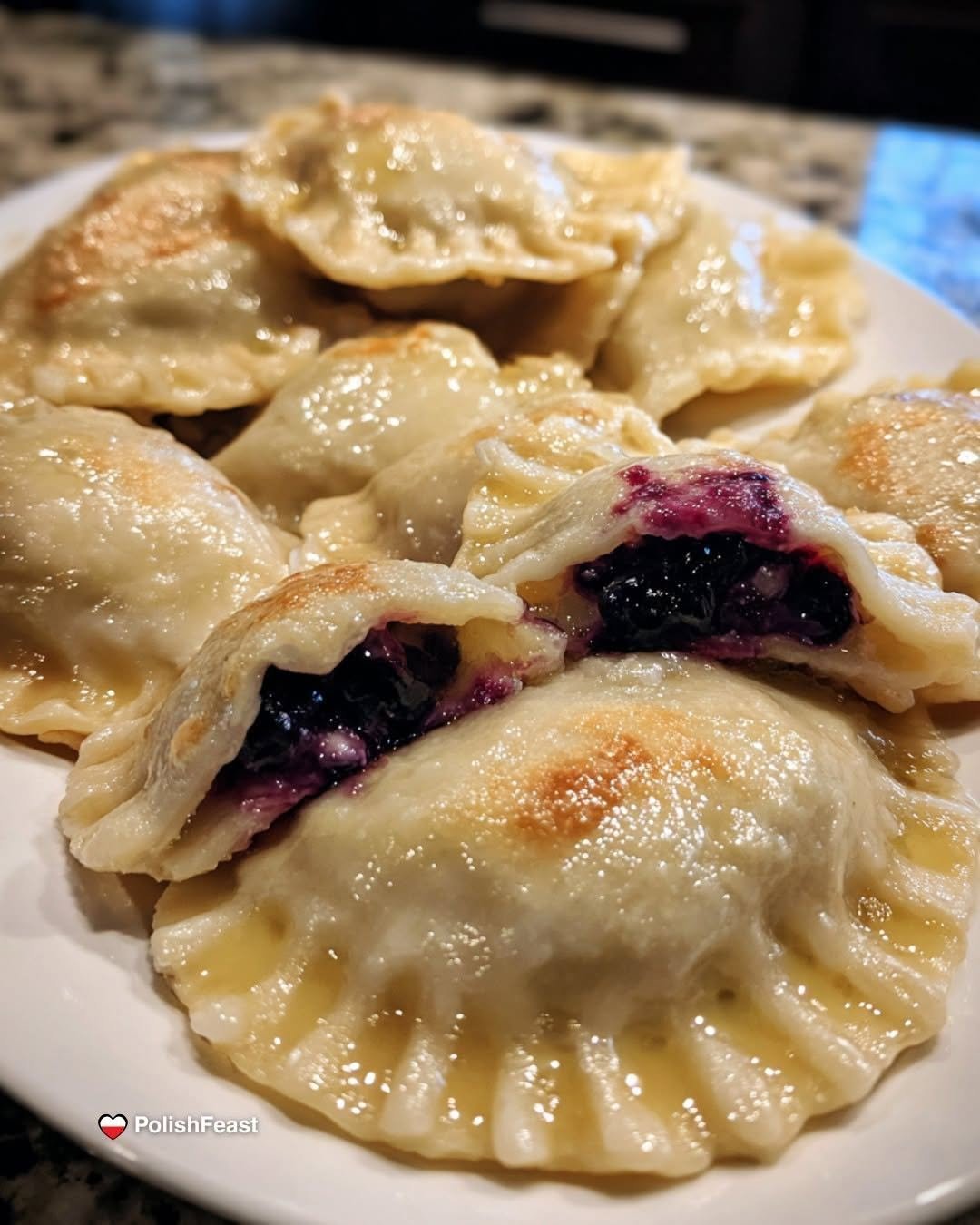
If you prefer something a little lighter, vanilla yogurt is another popular choice. You can also drizzle the pierogi with melted butter, dust them with powdered sugar, or top them with extra fresh blueberries. No matter which topping you choose, these homemade blueberry pierogi are always best served warm.
Troubleshooting
The pierogi opened while cooking. This usually happens when they are overfilled or the edges were not sealed tightly. Keep the edges clean, use about 1 teaspoon of filling, and press the edges together twice before boiling.
The filling is too runny. Fresh blueberries should always be dried well before mixing with the flour and sugar. If using frozen blueberries, do not thaw them first. The flour helps thicken the juices while the pierogi cook.Blueberries
The dough is too sticky. Sprinkle in a little more flour while kneading, but only a small amount at a time. The dough should feel soft and smooth, not dry.
The dough is too dry. Add a teaspoon of warm water at a time until the dough becomes soft and easy to knead.
The pierogi stick together. Place the cooked pierogi in a single layer and lightly brush them with melted butter. This helps keep them from sticking while you finish cooking the remaining batches.
Serving Suggestions
These traditional Blueberry Pierogi are best served warm with sweetened sour cream, vanilla yogurt, or a light dusting of powdered sugar. Fresh blueberries on top add beautiful color and even more fresh berry flavor.Gotowanie i przepisy
In Poland, Pierogi z Jagodami are often enjoyed as a sweet lunch or dinner during blueberry season. They also make a wonderful dessert after a family meal or a special weekend treat.
If you enjoy homemade Polish comfort food, be sure to try our Polish Strawberry Pierogi, Classic Pierogi Ruskie, Pierogi Dough Recipe, Jagodzianki (Polish Blueberry Buns), Polish Strawberry Pasta, and Racuchy z Jabłkami for more traditional recipes made with simple ingredients.
Make-Ahead and Storage
Refrigerator: Let the cooked pierogi cool completely before storing them in an airtight container. They will keep well in the refrigerator for up to 2 days.Cooking & Recipes
Freezer: Blueberry pierogi freeze very well. Arrange the uncooked pierogi in a single layer on a lightly floured baking sheet until frozen solid. Transfer them to a freezer-safe bag or container and freeze for up to 3 months.Eastern European Cuisine
Reheating: Frozen pierogi can be cooked directly from the freezer. Simply add 1 to 2 extra minutes to the cooking time after they float. Cooked pierogi can also be reheated in gently boiling water, warmed in a skillet with butter, or baked in a 350°F (175°C) oven until heated through.
Traditional Blueberry Pierogi (Pierogi z Jagodami) served with sweetened sour cream and fresh blueberries.
Blueberry Pierogi – Pierogi z JagodamiFlora & Fauna
FAQ
What are Pierogi z Jagodami?
Pierogi z Jagodami are traditional Polish dumplings filled with sweet blueberries. They are one of Poland’s most popular summer dishes and are usually served warm with sweetened sour cream.
Are blueberry pierogi served as dessert?
Not always. In Poland, blueberry pierogi are often served as a sweet lunch or dinner during the summer. They can also be enjoyed as a dessert.
Can I use frozen blueberries?
Yes. Frozen blueberries work very well. Do not thaw them before mixing with the flour and sugar, as they will release too much juice.
Why are my pierogi falling apart?
This usually happens when they are overfilled or the edges are not sealed well. Keep the edges clean, use only a small amount of filling, and pinch the dough firmly before cooking.Desserts
What is the best flour for pierogi dough?
Regular all-purpose flour gives the best balance of softness and strength for traditional pierogi dough.
Can I use other fruit?
Yes. Strawberries, raspberries, cherries, plums, and mixed berries all work well using the same method.
How do you pronounce Pierogi z Jagodami?
It is pronounced pyeh-ROH-ghee z yah-goh-DAH-mee.
Print Recipe